A leaking shower ranges from a minor annoyance to a hidden problem quietly rotting the framing behind your wall. The tricky part is that "the shower is leaking" can mean half a dozen very different things — a dripping valve, a cracked pan, failing grout, or a leaking drain — and each has its own fix and price. This guide walks through the common causes of a leaking shower, what each repair costs in 2026, and how to tell the simple fixes from the ones that need a professional before they cause real damage.
Why is my shower leaking?
Most shower leaks trace back to worn-out seals or damaged components at one of four points: the valve, the pan, the tile and grout, or the drain. Pinning down which is the first step toward fixing it.
- A dripping showerhead or valve. The most common and most visible. Usually a worn cartridge, O-ring, or seal inside the valve. Water drips from the head or handle even when the shower is off.
- Failing grout or caulk. Cracked or missing grout in the tile seams, or dried-out caulk where the wall meets the pan, lets water seep behind the tile. A leading cause of "invisible" leaks.
- A cracked or failing shower pan. If the pan (or its liner) cracks, water escapes underneath the floor — often showing up as a stain on the ceiling below or a soft spot outside the shower.
- A leaking drain. A bad drain seal or a clog that forces water past the assembly. Our guide on why a shower drain backs up covers the drain side in more depth.
Here in northern Palm Beach County, hard water speeds two of these along: mineral scale wears on valve cartridges and seals, and it clogs showerheads and drains faster than average.
How can I tell where the shower is leaking from?
A little detective work narrows it down before you call anyone:
- Water dripping from the head or handle with the shower off points to the valve or cartridge.
- A stain on the ceiling directly below the shower, or a soft/damp floor just outside it, points to the pan or drain — the most damaging kind, because water is escaping into the structure.
- Discolored or crumbling grout, or peeling caulk at the seams points to a surface-sealing problem.
- Water only during use, pooling at the base, can be the drain seal or the pan.
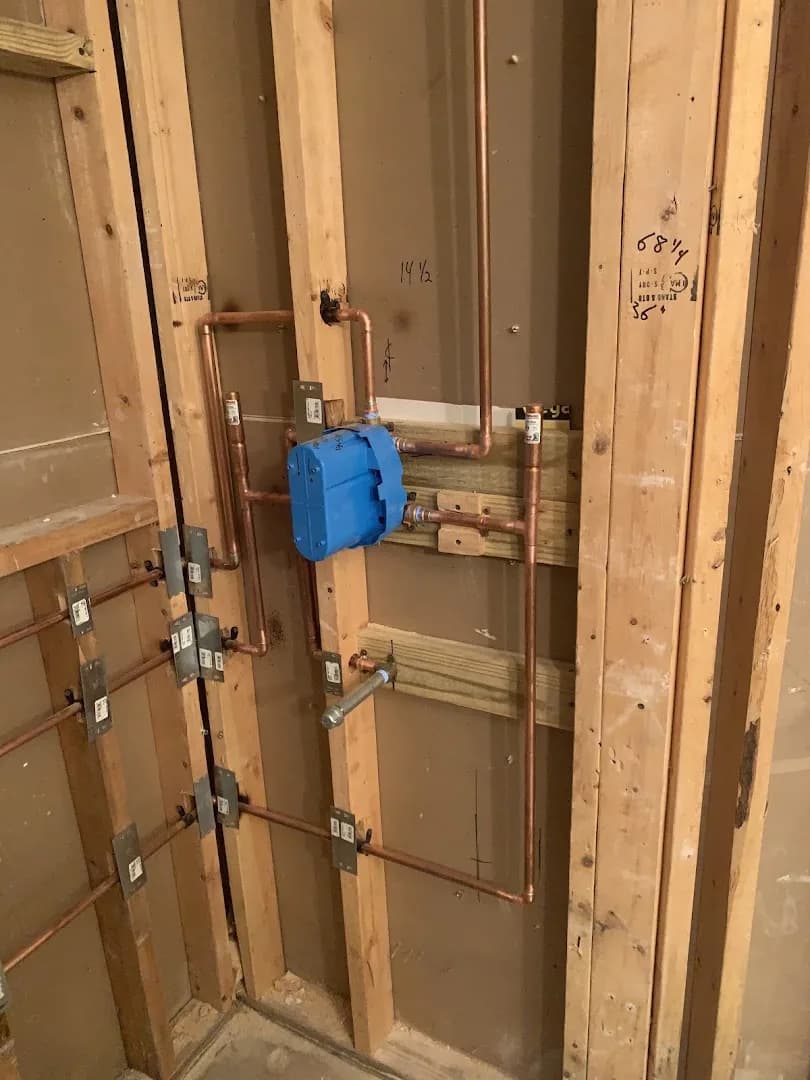
The key distinction is surface leaks (grout, caulk, a dripping head) versus behind-the-wall or under-the-floor leaks (pan, drain, valve body). Surface leaks are lower-stakes; hidden leaks demand prompt attention before they feed mold and rot.
How much does shower leak repair cost in 2026?
Cost tracks with the source:
- Overall shower leak repair (professional): $150 to $600 for common issues.
- Shower cartridge replacement: $100 to $350.
- Shower valve repair: $75 to $250.
- Grout or caulk repair: $180 to $450, depending on how much needs redoing.
- Drain repair: $150 to $400.
- Shower pan work: $500 to $2,000 for a small patch; $1,500 to $4,000 for full pan replacement.
The pattern is clear: valve, grout, and drain repairs are affordable, while pan work is the expensive end — which is exactly why catching a pan or hidden leak early, before it spreads into subfloor and framing, saves the most money.
Can I fix a leaking shower myself, or should I call a plumber?
Some shower leaks are reasonable DIY jobs; others aren't worth the risk. You can often handle:
- Re-caulking the seam where the wall meets the pan.
- Replacing a worn showerhead or cleaning a mineral-clogged one.
- Swapping a simple valve cartridge, if you're comfortable shutting off the water and following the manufacturer's steps.
Call a plumber when:
- There's a stain on the ceiling below or a soft spot in the floor — signs of a hidden leak reaching the structure.
- You suspect the shower pan or liner has failed.
- The valve is leaking inside the wall rather than just dripping from the handle.
- A repair you attempted didn't stop the leak — chasing it further can do more harm than good.
The deciding factor is whether the water is contained to surfaces you can see or escaping somewhere you can't. Anything hidden, structural, or behind tile is worth a professional's eyes. When a fixture or valve is beyond a simple repair, our fixture installation service replaces it cleanly, and for a leak you can't locate at all, professional leak detection pinpoints it without tearing open the wall.
How do I prevent shower leaks in the first place?
A little upkeep keeps most shower leaks from ever starting. Reseal the grout and caulk periodically — these are the first line of defense against water getting behind the tile, and they're cheap to maintain but expensive to ignore once water reaches the subfloor. Watch for cracked, crumbling, or darkening grout and re-caulk the wall-to-pan seam at the first sign it's drying out or pulling away.
Because our hard water is hard on shower components, a few habits pay off locally: clean mineral scale off the showerhead periodically so it doesn't force water past worn seals, and address a dripping valve early rather than letting a worn cartridge keep running. If your home has notably hard water, a water softener slows the scale that wears out cartridges, seals, and fixtures throughout the house. And any time you notice water lingering where it shouldn't — a damp base, a musty smell, a spot on the ceiling below — treat it as an early warning rather than waiting to see if it gets worse.
Don't let a small shower leak become a big one
A dripping valve is cheap to fix; the water damage from a pan leak left to spread is not. The moment you see a ceiling stain, a soft floor, or persistent dampness around the shower, treat it as a leak worth investigating. People's Choice Plumbing handles shower valve, fixture, and leak repairs across Jupiter, Palm Beach Gardens, Tequesta, North Palm Beach, Hobe Sound, Stuart, Palm City, and Jensen Beach.
Request shower or fixture repair or contact our team today.
Talk to a licensed plumber
Get a firm quote for your home from People's Choice Plumbing, serving Jupiter, Palm Beach Gardens, and all of northern Palm Beach County and Martin County.
Frequently Asked Questions
Why is my shower leaking?
Most shower leaks come from a worn valve cartridge or seal, cracked or missing grout and caulk, a failing shower pan or liner, or a bad drain seal. Identifying which of the four is leaking determines the fix and the cost.
How do I know if my shower pan is leaking?
A stain on the ceiling directly below the shower, a soft or damp spot in the floor just outside it, or persistent dampness with no visible surface source usually points to a pan or liner leak — a hidden leak that needs prompt professional attention.
How much does it cost to fix a leaking shower in 2026?
Professional shower leak repair typically costs $150 to $600. A cartridge replacement is $100 to $350, valve repair $75 to $250, grout or caulk repair $180 to $450, and drain repair $150 to $400. Full shower pan replacement is the costly end at $1,500 to $4,000.
Can I fix a leaking shower myself?
Simple fixes like re-caulking a seam, replacing a showerhead, or swapping a basic valve cartridge are reasonable DIY jobs. Call a plumber for a suspected pan leak, a valve leaking inside the wall, or any ceiling stain or soft floor indicating a hidden leak.
Does hard water cause shower leaks?
Hard water doesn't directly cause leaks, but it accelerates them — mineral scale wears on valve cartridges and seals and clogs showerheads and drains, which is why fixtures in South Florida often need attention sooner than average.